
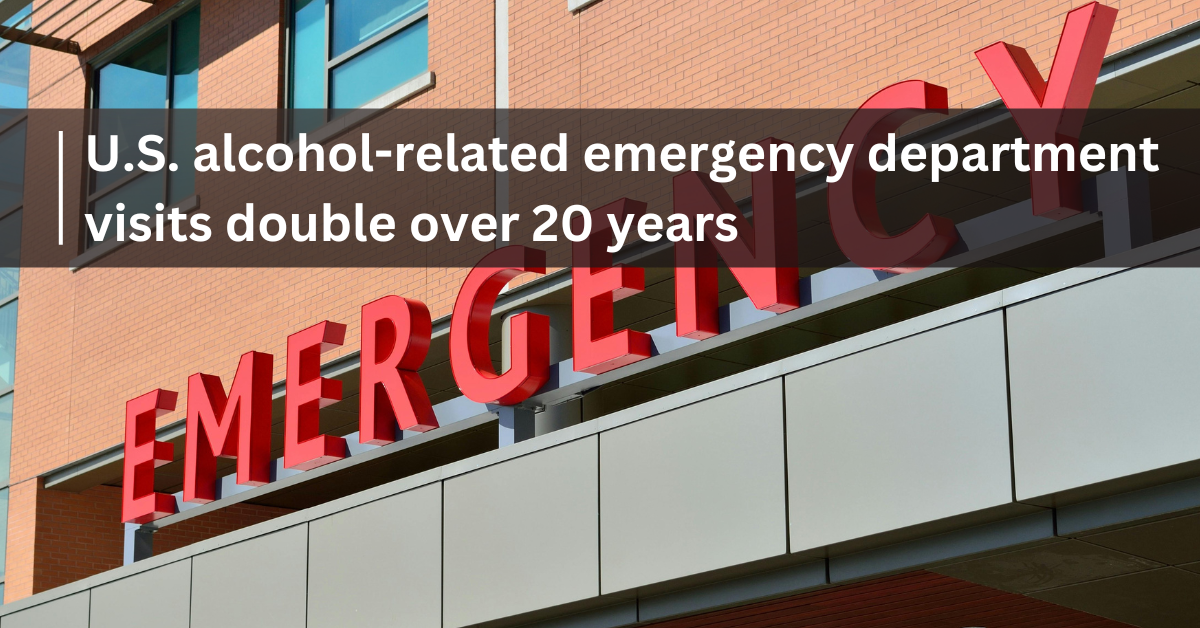
A recent analysis article published in Healio and authored by Sara Kellner examined the increases in alcohol-specific emergency department (ED) visits in the United States in recent decades. According to the data published by the National Center for Health Statistics, ED visits doubled among individuals in the United States from 2003 to 2022.
As part of the study, researchers analyzed data from the National Hospital Ambulatory Medical Care Survey to examine trends in alcohol-specific diagnoses during emergency department visits among men and women in the United States. It was found that alcohol-specific emergency department visits nearly doubled for both men and women in the United States. Although rates increased similarly for both sexes, men consistently had higher visit rates than women throughout the 20-year period. According to a spokesperson for NCHS, it is not possible to conclude whether the increasing trend is steady or whether ED visits peaked at any time during the study period.
In addition, a 2024 report from the Substance Abuse and Mental Health Services Administration (SAMHSA) revealed that alcohol was the most common substance involved in substance-related ED visits from 2021 to 2023, with double the number of visits compared with those involving cannabis or opioids.
“Increased alcohol consumption and alcohol use disorder (AUD) over the past 2 decades —leading to doubling of ED visits among both males and females — have been driven by a complex interplay of socioeconomic stressors due to economic policy changes, demographic shifts and widening health disparities,” wrote Dr. Robert Glatter, Assistant Professor of the Zucker School of Medicine at Hofstra/Northwell and emergency medicine physician at the Lenox Hill Hospital, as part of his perspective for the Healio article. “These stressors particularly affect women, older adults, racial and ethnic minorities, and socioeconomically disadvantaged populations.”
Moreover, he recommended that clinicians take a practical approach to AUD by addressing underlying factors that contribute to excessive drinking and by recognizing the risk of severe withdrawal and complications such as pancreatitis, cirrhosis and variceal bleeding. According to Dr. Glatter, future research and care should combine standard treatments with newer options like IV ketamine and GLP-1 medications, along with digital monitoring and psychosocial support to reduce cravings, prevent relapse and support long-term sobriety.