
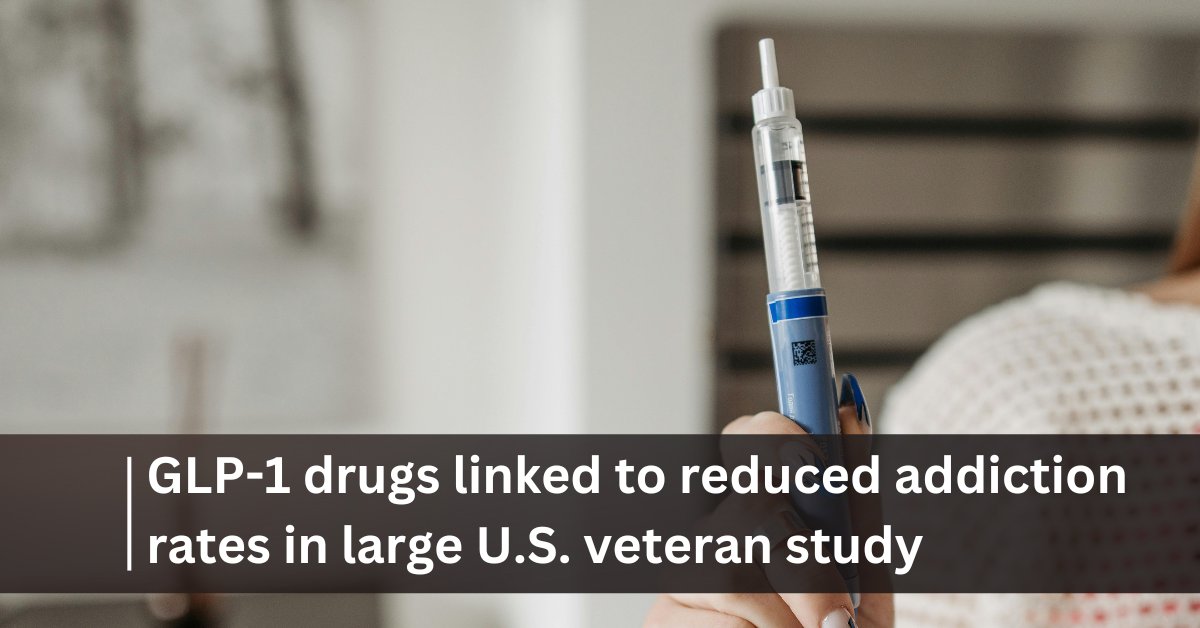
According to the results of a new study, individuals who were prescribed a glucagonlike peptide-1 (GLP-1) receptor agonist for diabetes treatment were significantly less likely to develop a new substance use disorder. The study, published in the British Journal of Medicine (BMJ), followed over 600,000 U.S. veterans for three years, and found that participants taking GLP-1 drug for diabetes were about 15% to 20% less likely to misuse substances ranging from alcohol to opioids.
The participants were split into two groups: those without a pre-existing substance use disorder and those who already had one. In addition, veterans on GLP-1 medications were compared with those taking SGLT2 inhibitors, another class of diabetes drugs.
For participants without a prior addiction, GLP-1 use was associated with a lower risk of developing substance use disorders involving alcohol, opioids, nicotine, cocaine, cannabis and other substances. Furthermore, among participants who already had a substance use disorder, GLP-1 use was associated with lower rates of hospitalization, overdose and death. Finally, the study also found a 25% reduction in suicidal ideation among GLP-1 users.
However, researchers caution that despite its large size, the study was observational and not a controlled clinical trial, and therefore cannot confirm that GLP-1 drugs are a safe and effective treatment for addiction. Results from ongoing trials are expected in the coming year.
In the U.S., some clinicians are already prescribing GLP-1 drugs off-label for substance use disorders, but some health experts have voiced concerns that this evidence remains insufficient to support their use over established treatments such as naltrexone. While one recent randomized trial found that semaglutide (marketed as Wegovy and Ozempic) reduced alcohol consumption in individuals with alcohol use disorder, another trial using a different GLP-1 drug did not demonstrate a significant benefit. Additional clinical trials, including one conducted by Eli Lilly, are expected to report results later this year.