
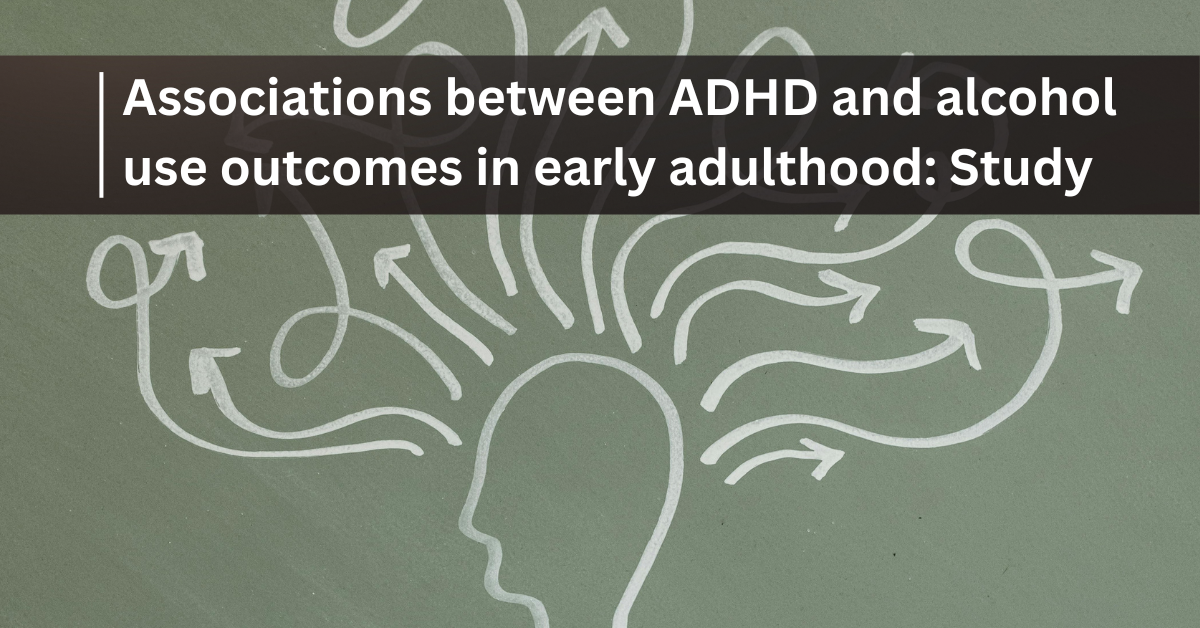
According to the results of a new study, young adults diagnosed with ADHD who are less confident in social situations are significantly more likely to use alcohol as a coping mechanism, which contributes to a higher risk for problem drinking. The study, published in the journal Alcohol: Clinical and Experimental Research, examined data from 333 participants, with half of the participants being diagnosed with ADHD.
The research aimed to explore whether the way individuals with ADHD perceive their social functioning may contribute to whether or not they develop problems related to alcohol use. As such, the study participants reported their sociability, social and coping motives for drinking, and alcohol use between ages 18 and 21 years, as well as their alcohol use and related problems at the age of 23 years.
The results of the study revealed that childhood ADHD was linked to lower self-reported sociability, which in turn was associated with a greater tendency to drink as a coping mechanism. Among individuals who experienced alcohol-related problems, those who drank to cope reported more severe issues.
At the same time, childhood ADHD was associated with a reduced motivation to drink for social enhancement. This lower social drinking motivation was linked to less frequent heavy drinking at age 23 and fewer alcohol-related problems among those who did encounter such issues.
The authors concluded that these results suggest that how individuals perceive their social abilities and comfort in social settings shapes their drinking motives, which can influence the risk of problematic alcohol use. In addition, they also point to the potential of supporting young people with ADHD in developing healthier coping strategies and greater social confidence to reduce this risk.
“Considering the perceptions of sociability among young adults with ADHD may help disentangle complex social pathways to alcohol use,” wrote the authors. “Results highlight the need to develop healthy coping strategies among young adults with ADHD.”