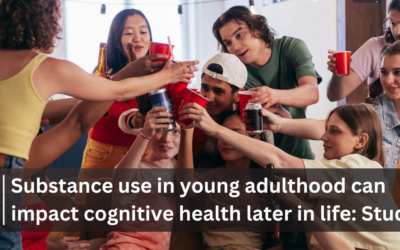

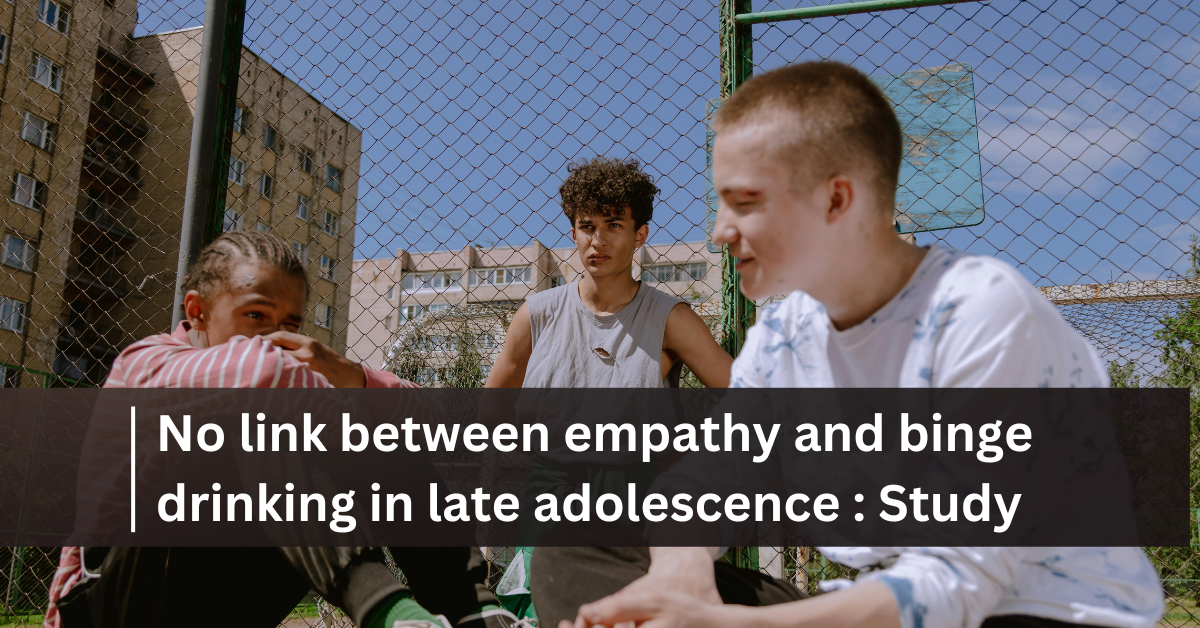
According to the results of a new study, no significant relationship was found between empathy and alcohol consumption in late adolescents. The research study, published in the peer-reviewed journal PLOS One, was carried out using an online survey with U.S. university students aged 18-23 years as participants. The survey included questions evaluating drinking behavior (categorized as non-binge, binge, and extreme binge drinking), as well as engagement in hazardous drinking (measured on a continuous scale).
The authors defined binge drinking as “a pattern of alcohol consumption that raises blood alcohol concentration (BAC) to 0.08% (0.08 grams per deciliter) or higher; for a typical adult, this level is generally reached after consuming five or more standard drinks for men, or four or more standard drinks for women, within approximately two hours.” In addition, extreme binge drinking was defined as “the consumption of alcohol at two or more times the gender-specific levels of BD (10 or more standard drinks at one time for men or 8 or more standard drinks at one time for women).”
The study results revealed that binge drinking categories closely corresponded with hazardous drinking scores, indicating that both measures reflect similar types of alcohol use. It was also found that male participants exhibited more problematic drinking patterns than women, whereas female participants reported significantly higher levels of affective empathy. In addition, participants’ age was positively associated with hazardous drinking, with older participants demonstrating riskier alcohol consumption.
The research showed that there was no significant association between affective empathy and binge or hazardous drinking in late adolescents. As expected by researchers, cognitive empathy was also unrelated to the severity of alcohol consumption. “Additionally, we observed a striking pattern in our data: 20.69% of our sample indicated extreme binge drinking (EBD), which is higher than the 12% reported by a U.S. national survey conducted in 2020,” wrote the authors.
The authors had originally hypothesized that there would be an association since during adolescence, increased sensitivity to peer influence combined with higher empathy may make individuals more responsive to others’ emotions and social situations, potentially influencing their drinking behavior. “These findings make clear that progress in this field depends on distinguishing between extreme drinking patterns, situating them within their social and cultural contexts, and adopting standardized, psychometrically robust measures of empathy,” concluded the researchers.