

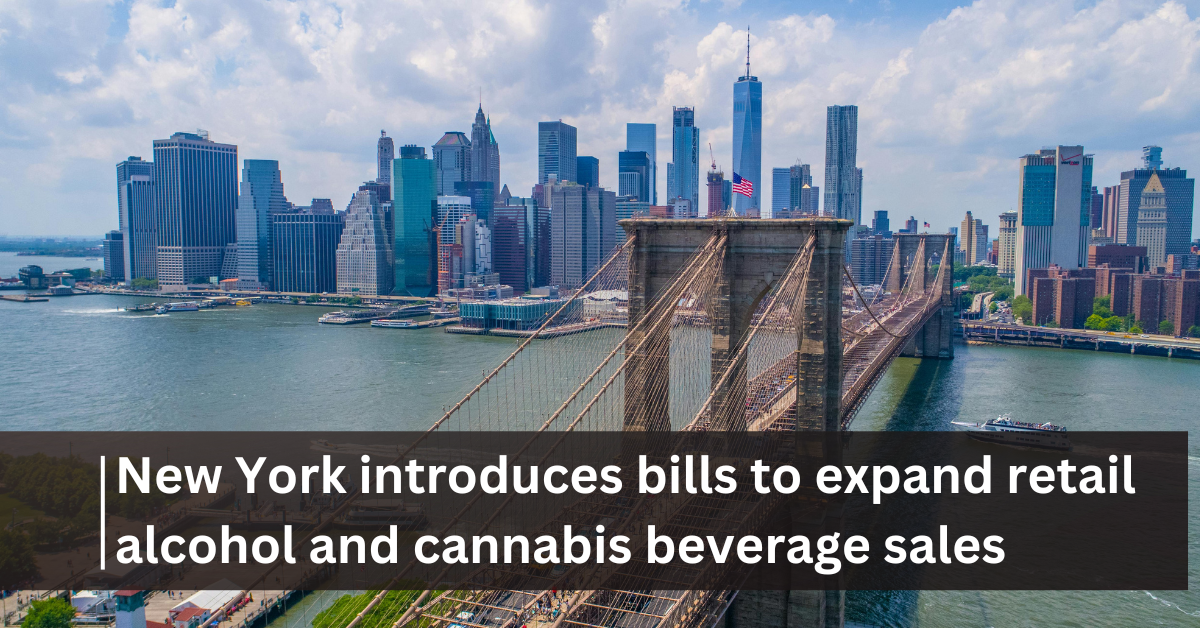
In February, democratic lawmakers in New York introduced new bills to expand the sale of wine, liquor, and cannabis drinks. Specifically, one bill aims to permit supermarkets and local bodegas to sell hard alcohol and wine, while another would allow liquor stores to sell low-potency weed beverages. According to the lawmakers, the purpose of these bills is to “modernize” New York’s alcohol laws, as well as to promote vineyards, agricultural businesses, and the craft spirits industry, and to generate tax revenue for social equity programs. However, independent liquor store owners have historically opposed similar proposals.
Bill S9032/A9284 would allow supermarkets and bodegas to sell wine and spirits, and permit certain grocery stores with pre-2025 wholesale licenses to bypass current proximity restrictions near schools and churches. While similar proposals received voter support, earlier versions included size limitations, higher upfront costs, and distance requirements from existing liquor retailers.
According to the bills’ sponsors, State Senator Luis Sepulveda and Assemblymember Amanda Septimo, the new proposed bills would remove prior restrictions, facilitating market entry for smaller retailers and creating an exception to the state’s current single-license rule for grocery stores.
Currently, grocery stores across 40 other U.S. states already sell wine, while legislation in 20 states allows them to sell beer, wine, and liquor together. However, so far, attempts to implement more permissive rules about alcohol sales met resistance from independent liquor store owners who don’t want to lose customers to corporate chains. However, proponents of S9220/A10191 argue that the new changes may help them expand their customer base to compensate for potential lost sales. In addition, these bills would let retail liquor shop owners acquire a special permit to stock cannabis beverages.
If passed, the new legislation would permit the sale of single-use cannabis beverages containing up to five milligrams of THC, which must be displayed separately from alcoholic products. It also proposes a 9% distributor tax and a 13% retail tax, with revenues allocated to the State Liquor Authority, local governments, and social equity initiatives, according to the sponsors.