
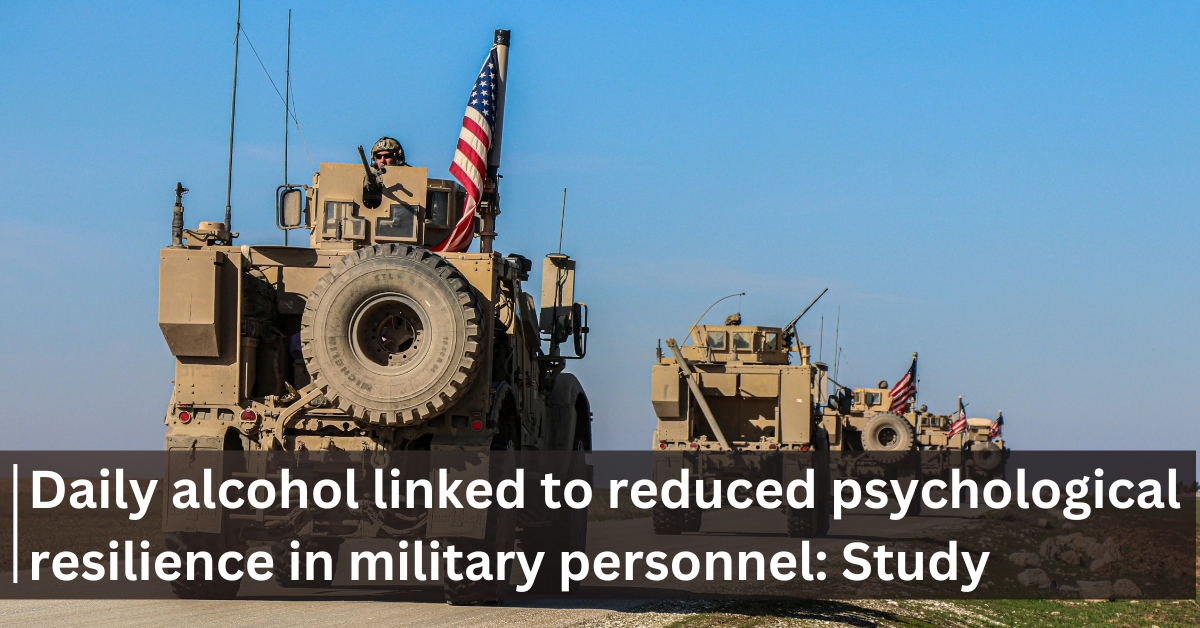
According to the results of a recent study, regular consumption of alcohol is associated with reduced mental fortitude among soldiers. Specifically, it was found that military personnel who consume at least one alcoholic beverage daily had significantly reduced levels of emotional intelligence and self-worth. The study authors suggest that findings could mean that coping mechanisms often used to manage military stress may actually lower the psychological tools necessary for service.
The study, published in the peer-reviewed journal Military Psychology, included 739 Spanish Army personnel stationed at a base in Almería, representing both operational and support units, with a predominantly male sample (comprising approximately 88% of the participants), a mean age of about 33 years, and women comprising roughly 12% of participants. The researchers measured emotional intelligence, psychological resilience, and self-esteem of the personnel using standardized assessment instruments.
The study results reveal that soldiers who consumed alcohol daily scored significantly lower on measures of emotional intelligence, resilience, and self-esteem compared with non-daily drinkers, with deficits observed in stress management, interpersonal functioning, and adaptation to adversity. Moreover, daily drinkers represented approximately 15% of the sample and were predominantly male, although the association between daily alcohol use and poorer psychological outcomes was observed regardless of gender. No relationship was found between years of military service and daily alcohol consumption.
Further analysis also identified two distinct psychological profiles: a healthier group characterized by higher resilience, emotional intelligence, and self-esteem and no daily alcohol use, and a more vulnerable group defined by daily alcohol consumption and lower scores across all psychological measures. While the findings indicate a clear association between daily alcohol use and reduced psychological resources, the cross-sectional design precludes conclusions about causality, and it remains unclear whether alcohol use contributes to psychological vulnerability or reflects pre-existing difficulties.
The study authors suggest that alcohol acts as a maladaptive coping mechanism, and may provide temporary relief from feelings of isolation or stress. However, it appears to impair the development of genuine emotional regulation, prompting the individual to suppress their emotions, and inhibiting the strengthening of resilience. The authors also concluded that over time, this could result in military personnel being less prepared for the psychological demands of their job.